The Boston Consulting Group projects that the tokenization of global illiquid assets will grow into a $16 trillion market by 2030. You likely recognize that land remains one of the most stable ways to preserve wealth, yet high entry barriers and the illiquidity of physical property often make it feel out of reach. Selecting a reliable real estate tokenization platform isn’t just a technical hurdle; it’s a vital step toward securing fractional equity in the US land market while avoiding the friction of traditional deed transfers.
It’s understandable to feel hesitant when blockchain complexity or non-compliant offerings cloud the investment landscape. This guide provides the clarity you need to evaluate and compare the leading platforms of 2026 with professional confidence. You’ll learn how to identify transparent, legally sound structures that turn US soil into a source of passive growth. We’ll break down the specific security standards and agricultural performance metrics that define a trustworthy investment environment for your capital.
Key Takeaways
- Understand the fundamental shift from traditional REITs to blockchain-verified ownership, providing you with more direct control over your property assets.
- Learn how to evaluate a real estate tokenization platform by analyzing its technical stack, legal wrappers, and asset acquisition transparency.
- Compare different investment models, such as rental yield versus land equity, to determine which strategy best aligns with your long-term financial goals.
- Master the 2026 due diligence checklist to verify the legal connection between digital tokens and the underlying physical land deeds.
- Explore how specialized STO models allow you to gain fractional equity in diversified national residential land portfolios with institutional-grade security.
The Evolution of Property Investment: Why Tokenization Platforms Dominate in 2026
The financial landscape has undergone a fundamental shift. Investors now view a real estate tokenization platform as a digital gateway to fractional property equity, moving away from the opaque structures of the past. While traditional Real Estate Investment Trusts (REITs) provided a way to track property markets, they often lacked the transparency and direct ownership that modern investors demand. In 2026, blockchain-verified ownership structures have replaced these legacy systems, offering a clear, immutable record of who owns what piece of the earth.
Market data supports this transition. Real-world asset (RWA) tokenization is the fastest-growing sector in finance. The Boston Consulting Group projects the market for tokenized illiquid assets to reach $16 trillion by 2030. This growth isn’t driven by speculation. It’s powered by the efficiency of Smart Contracts. These self-executing codes automate the complex tasks that used to require a small army of lawyers and accountants. Dividends are distributed instantly, and ownership transfers happen without the traditional 30-day closing window.
From Illiquid Deeds to Digital Assets
Traditional land flipping remains inaccessible to most individual investors because of high capital requirements and administrative hurdles. It’s common for a single plot of agricultural land to require a six-figure down payment. Tokenization removes this friction by digitizing the deed and splitting it into affordable units. This process eliminates the need for physical paperwork and lowers entry minimums significantly. RWA serves as a bridge between physical land and digital liquidity, giving tangible assets the mobility of a modern stock exchange.
The 2026 Regulatory Landscape
Safety is the cornerstone of any long-term investment. In 2026, the primary differentiator between a professional real estate tokenization platform and a volatile crypto project is its adherence to SEC-compliant frameworks. Most reputable platforms operate under Regulation D for private placements or Regulation S for international investors. These frameworks ensure that the digital asset is backed by a legal claim to the property. Robust KYC (Know Your Customer) protocols are standard practice now. They protect the ecosystem from fraud and ensure that every participant is verified, creating a stable environment for wealth preservation.
How a Real Estate Tokenization Platform Operates
A modern real estate tokenization platform functions as a sophisticated bridge between the physical stability of land and the liquid efficiency of digital finance. At its core, the system utilizes a multi-layered technical stack. This includes a blockchain layer for immutable record-keeping, a minting engine that generates tokens based on legal ownership, and a user-facing dashboard. The lifecycle begins when a platform acquires or secures a high-value asset, such as a productive vineyard or a commercial plot. By wrapping the property in a Special Purpose Vehicle (SPV), the platform can issue digital fractions that represent direct economic interests in that specific asset.
Liquidity is the most transformative feature of these systems. Traditionally, selling land takes between six to twelve months. A real estate tokenization platform solves this by integrating secondary markets where investors trade their holdings in seconds. These platforms also bridge the gap between old and new financial worlds by connecting digital wallets with traditional banking systems. This allows for seamless fiat-to-crypto transitions, ensuring that even those unfamiliar with blockchain can participate. If you’re looking to start small, you can diversify your portfolio with land through these streamlined digital interfaces.
The Issuance Process
Before any token reaches an investor, the underlying asset undergoes a rigorous audit. Independent surveyors and legal teams verify titles, zoning rights, and environmental reports. A crucial component here is the “Oracle.” This is a specialized data feed that pulls real-world information, like current market prices or crop yields, and pushes it onto the blockchain. This ensures the digital price matches the physical reality. To understand the broader implications of this technology, you can explore our guide on real estate blockchain and how RWA tokenization is reshaping global markets.
Investor Dashboards and Management
The real estate tokenization platform provides a centralized hub for asset management. Investors don’t just hold a token; they manage a productive asset. The dashboard offers several key functions:
- Real-time Tracking: Portfolio performance and equity value are updated as market data changes.
- Governance: Many platforms allow token holders to vote on major corporate actions, such as when to sell the property or how to reinvest profits.
- Security Protocols: High-end platforms use two-factor authentication (2FA) and keep the majority of digital assets in cold storage to prevent unauthorized access.
This level of transparency was impossible in traditional real estate. Now, an investor can see exactly how their capital is performing at any hour of the day. The combination of blockchain security and intuitive design makes the process of owning land as simple as managing a bank account.
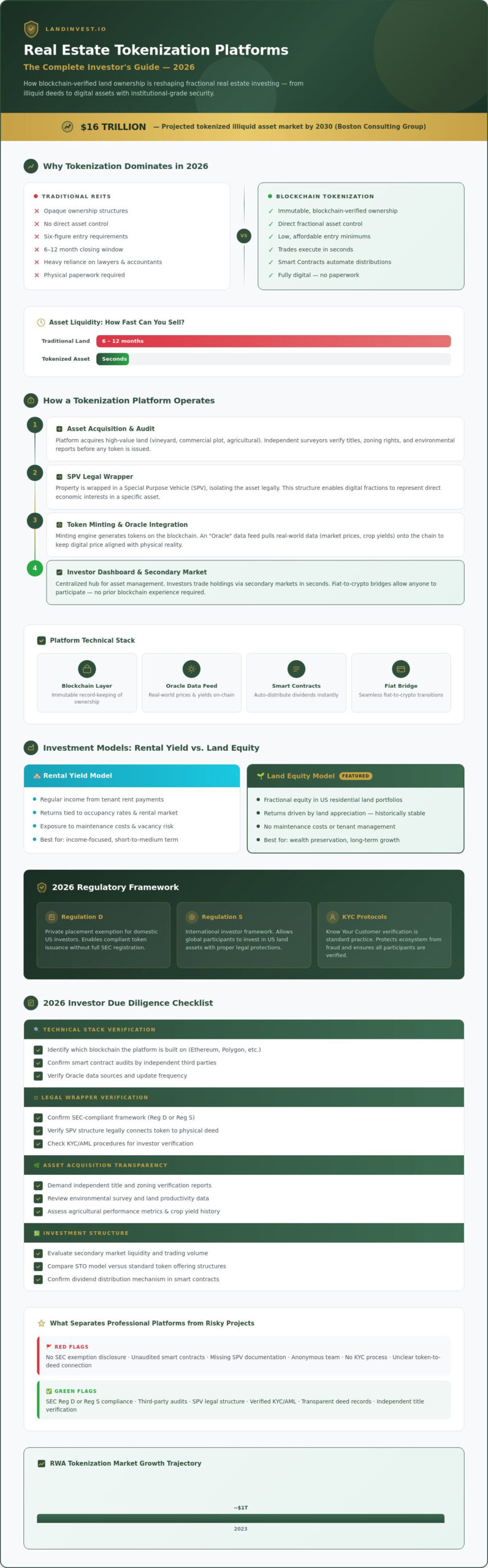
Comparing Investment Models: Rental Yield vs. Land Equity
Investors entering the digital asset space often face a choice between two distinct philosophies: immediate cash flow or long-term capital appreciation. While both utilize blockchain technology, the underlying asset classes dictate your risk profile and exit strategy. Choosing the right real estate tokenization platform requires understanding whether you want to be a digital landlord or a strategic land partner. Each model serves a different purpose in a diversified portfolio, but the stability of the underlying asset remains the most critical factor for 2026.
Rental Platforms (e.g., Lofty, RealT)
Rental-centric models focus on residential or commercial buildings where tenants pay monthly. Platforms like Lofty and RealT have popularized this by offering tokens that represent a fraction of a specific deeded property. The primary advantage is immediate liquidity through daily or weekly rental distributions. It’s an accessible entry point for international investors who want exposure to the American housing market without the legal hurdles of direct ownership. You can start with as little as $50 and see returns almost instantly.
However, buildings are depreciating assets that require constant oversight. Investors must account for property management fees, which typically consume 8% to 12% of gross revenue, alongside maintenance costs and property taxes. If a tenant stops paying or a HVAC system fails, your yield drops instantly. According to 2024 census data, rental vacancy rates can fluctuate significantly by region, introducing a layer of unpredictability. These platforms suit those who prefer small, residual income streams and are comfortable with the slower appreciation rates of finished structures.
Equity-Based Platforms (e.g., Land Invest Corp)
Equity-based tokenization operates differently by backing a professional firm’s portfolio rather than a single house. Land Invest Corp focuses on residential vacant land, an asset class that avoids the operational headaches of physical structures. This model prioritizes capital growth. Instead of collecting small rent checks, investors gain exposure to the margins generated through professional land flipping and strategic development. Land is a finite resource. It doesn’t break, it doesn’t require insurance against tenant damage, and its carrying costs are significantly lower than improved real estate.
This approach is ideal for building long-term wealth. By participating in fractional land ownership, you’re investing in the “raw material” of the real estate market. While the growth horizon is longer than a daily rental payout, the potential for high-margin returns is often greater because you’re entering the value chain at the earliest stage. This real estate tokenization platform model provides a stable, transparent path for investors who value the inherent worth of the earth over the volatility of the rental market. It’s a conservative yet high-growth strategy that treats land as the ultimate foundation for financial security.
The Investor Due Diligence Checklist for 2026
Selecting a real estate tokenization platform in 2026 requires a shift from speculative excitement to cold, analytical scrutiny. As the market for Real World Assets (RWA) matures, the difference between a secure yield and a total loss often lies in the fine print of the platform’s operational framework. You aren’t just buying a digital asset; you’re participating in a regulated financial instrument tied to physical property.
Your due diligence should begin with these four pillars:
- The Legal Wrapper: Verify if the token represents a direct deed or, more commonly, interest in a Special Purpose Vehicle (SPV) like an LLC. Most compliant platforms in 2026 use SPVs to shield investors from personal liability while ensuring the digital token is legally recognized as a security.
- Underlying Asset Track Record: Look past the digital interface. Investigate the entity managing the land. If you’re investing in agricultural land, the operator should demonstrate at least a 10 year history of stable yields and sustainable land management.
- Blockchain Infrastructure: Confirm the platform utilizes a secure, public ledger. Ethereum and Polygon remain the industry standards for institutional grade security. Private blockchains often lack the transparency and interoperability required for long term asset safety.
- Total Cost of Ownership: Analyze the fee structure beyond the initial purchase. This includes platform entry fees, recurring management percentages (typically 1% to 2% annually), and gas fees for on-chain transactions.
Transparency and Reporting
In the digital age, transparency in on-chain property data is the real-time, immutable visibility of title records, tax obligations, and revenue distributions accessible via a public block explorer. Reliable platforms provide quarterly audits and maintain active SEC filings to ensure regulatory alignment. You should prioritize teams with a visible leadership hierarchy where members possess verifiable experience in traditional real estate and capital markets. Avoid anonymous founders or platforms that hide their physical office locations.
Liquidity Options
While real estate is traditionally an illiquid asset, a modern real estate tokenization platform should offer clear exit strategies. Check if the platform hosts a secondary marketplace or if the tokens are compatible with regulated decentralized exchanges. You must understand the lock-up periods common in a security token offering, which often restrict resale for 12 months under specific regulatory exemptions. Liquidity isn’t guaranteed, but the infrastructure to facilitate it must be present before you commit capital.
Evaluating these factors ensures your portfolio is built on a foundation of tangible value rather than digital hype. If you’re ready to move toward a more stable asset class, you can explore secure land investment opportunities that prioritize long term wealth preservation.
Land Invest Corp: A Specialized Platform for Land Equity
Land Invest Corp represents a strategic evolution in how investors approach property ownership. By acting as a bridge between traditional land flipping and digital finance, this real estate tokenization platform transforms a historically illiquid asset class into a streamlined investment vehicle. While many platforms focus on high-rise apartments or commercial warehouses, Land Invest Corp prioritizes the foundational element of all development: the land itself.
The platform operates through a Security Token Offering (STO) model. Instead of buying a single plot, investors gain equity in a diversified national residential land portfolio. This structure provides a layer of security that single-property investments lack. By 2026, the roadmap for token holders includes enhanced secondary market liquidity and automated dividend distributions based on the successful resale of parcels within the portfolio. Land remains a finite resource, and as urban centers become increasingly crowded, vacant residential land serves as a reliable hedge against the volatility often seen in the housing market.
The Land Acquisition Strategy
Success in land investment depends on data, not guesswork. Land Invest Corp utilizes proprietary algorithms to identify undervalued residential parcels nationwide that possess high-margin resale potential. The strategy focuses on “path of progress” locations where infrastructure development is imminent. This analytical approach allows the firm to acquire assets at a fraction of their future market value.
- Data-Driven Sourcing: We analyze zoning changes, tax lien records, and regional migration patterns to find hidden opportunities.
- Risk Mitigation: Diversification across multiple states ensures that a localized economic downturn doesn’t compromise the entire portfolio.
- Equity Growth: Investors benefit from the appreciation of the underlying land and the profits generated from efficient flipping cycles.
Understanding these mechanics is essential for anyone looking to master the broader world of tokenized real estate. It’s about moving beyond simple speculation and toward a model built on tangible, earth-bound value.
Getting Started with Land Invest
The transition from a traditional investor to a fractional equity owner is designed to be transparent and efficient. After completing a standard KYC (Know Your Customer) process, investors can access the platform’s dashboard to review the current land holdings and historical performance data. Owning equity in the firm, rather than a single property, means your investment is managed by experts who handle the complexities of titles, taxes, and negotiations.
This professional management removes the “sweat equity” usually required in land flipping. You aren’t just buying a token; you’re participating in a managed business model designed for stability and long-term growth. The 2026 roadmap emphasizes user-centric features, including real-time portfolio tracking and simplified tax reporting tools. Explore the Land Invest Corp STO and start building your land portfolio today.
Securing Your Legacy in the 2026 Digital Property Market
The shift toward digital assets isn’t just a temporary trend; it’s a fundamental restructuring of how we build wealth. By 2026, choosing the right real estate tokenization platform means looking beyond flashy interfaces to find structural stability. You’ve seen how land equity provides a distinct advantage over traditional rental models by focusing on the intrinsic value of the soil itself. Success in this landscape requires a rigorous due diligence process that prioritizes physical asset backing and regulatory clarity above all else.
Land Invest Corp operates as a compliant US based corporation designed to bridge the gap between traditional land ownership and modern liquidity. Led by real estate veteran Randy Goldberg, the platform secures its value through physical residential vacant land assets. It’s a calculated approach to diversification that helps protect your capital from the unpredictability of traditional markets. You don’t have to navigate these complex shifts alone. Join the future of land investing with the Land Invest Corp STO to begin your journey toward a more stable and transparent financial future. Your path to a resilient portfolio starts with a single, well informed decision today.
Frequently Asked Questions
What is a real estate tokenization platform?
A real estate tokenization platform is a digital infrastructure that converts ownership rights of physical property into digital tokens on a blockchain. This process allows you to purchase fractional shares of assets like farmland or commercial buildings with precision. By 2026, these platforms have streamlined the investment process by removing traditional intermediaries. This technology ensures transparency and provides a permanent, secure ledger for every transaction you make.
Is tokenized real estate legal in the United States?
Tokenized real estate is legal in the United States when it complies with SEC regulations such as Regulation D or Regulation A+. These offerings are treated as securities, meaning they must follow strict disclosure and registration rules. Since the 2021 increase in regulatory clarity, platforms must verify identities through KYC and AML protocols. This legal framework protects your capital by ensuring the underlying asset is properly titled and managed.
How do I earn money from a real estate tokenization platform?
You earn money through a real estate tokenization platform primarily via rental yields and property value appreciation. Most platforms distribute monthly or quarterly dividends directly to your digital wallet based on the property’s actual performance. For instance, farmland investments often provide consistent returns through crop sales and natural land value growth. These payouts are proportional to the number of tokens you hold in the specific project.
What is the difference between a tokenized property and a REIT?
The main difference is that tokenized properties offer direct ownership of a specific asset while REITs are shares in a managed portfolio. Tokenization provides 24/7 transparency through the blockchain, whereas REITs often report performance on a quarterly basis. You choose exactly which building or plot of land to fund. This granular control allows for better diversification compared to the broad exposure of a traditional real estate fund.
Can I sell my real estate tokens whenever I want?
You can sell your tokens on secondary markets, though liquidity depends on the platform’s trading volume. Many platforms now utilize Alternative Trading Systems (ATS) to facilitate these transactions. While it’s faster than selling physical property, it’s not always instantaneous like trading stocks. Most investors treat these as long term holdings to benefit from the stability and growth of the underlying real estate asset.
Do I need to be an accredited investor to use these platforms?
You don’t always need to be an accredited investor, as many platforms use Regulation A+ to allow retail participation. However, certain high value offerings under Regulation D are still restricted to individuals with a net worth over $1 million. Approximately 65% of new platforms in 2026 offer at least one tier for non-accredited users. Always check the specific offering circular to see the eligibility requirements for each property.
What happens if the platform goes bankrupt?
Your investment is protected because the property is typically held in a Special Purpose Vehicle (SPV) separate from the platform’s corporate assets. If the platform fails, the SPV continues to own the land or building for the benefit of the token holders. A third party trustee or management company usually takes over the administration. This structure ensures that your ownership remains legally valid regardless of the platform’s financial health.
How is the value of my real estate token determined?
The value of your token is determined by the fair market value of the underlying asset as established by independent appraisals. Platforms typically conduct these valuations annually or semi-annually to update the token’s Net Asset Value (NAV). In 2025, industry standards moved toward more frequent digital reporting to reflect real time market conditions. This data driven approach ensures you have an accurate picture of your portfolio’s worth.