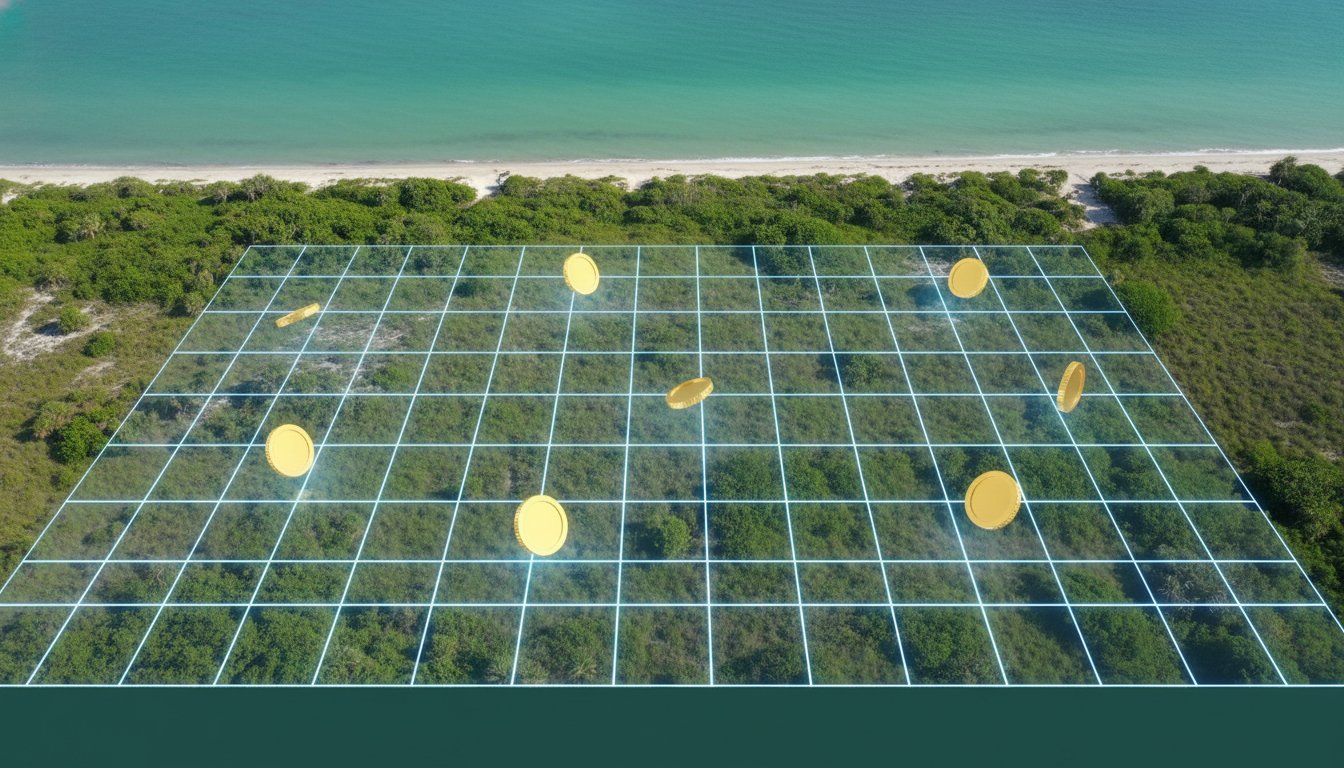
For decades, the wealthiest 1% of American investors have used raw land as a silent hedge against inflation; however, until 2024, the average entry price for a high-yield land portfolio often exceeded $250,000. It’s a classic gatekeeper’s market where the best deals were reserved for those with deep pockets and endless time for due diligence. You likely agree that land is the ultimate stable asset, but the high cost of entry and the management headaches of remote ownership often make it feel out of reach. This is where fractional land ownership changes the math for the 2026 investor by breaking these massive assets into accessible, digital shares.
This guide reveals how asset tokenization is democratizing the U.S. real estate market, allowing you to invest in high-margin land portfolios with the same ease as buying a stock. You’ll discover how to build a diversified portfolio and gain exposure to professional land flipping operations without ever picking up a phone or signing a local permit. We’ll break down the mechanics of these digital shares, the 12% to 18% historical margins found in land arbitrage, and the specific steps to secure your passive stake in the earth’s most reliable resource.
Key Takeaways
- Understand how the shift from traditional tenancy to modern entity-based models is opening the U.S. real estate market to a broader range of investors.
- Identify the legal and practical differences between deeded and equity structures to determine which model best aligns with your financial goals.
- Discover why strategic investments in vacant land can offer higher margins and greater stability than traditional residential rental yields.
- Learn how fractional land ownership democratizes access to high-value portfolios, allowing for professional diversification with lower entry costs.
- Evaluate the essential due diligence steps and technological innovations, such as STOs, that ensure transparency and security in digital-first land equity.
What is Fractional Land Ownership and Why is it Trending?
Fractional land ownership represents a fundamental shift in how individuals build wealth through tangible assets. At its core, this model allows you to own a specific percentage of a land parcel or, more commonly in 2026, a share in a legal entity like an LLC that holds the title. This structure differs significantly from the historical “Tenancy in Common” (TIC) arrangements. While TIC often required complex legal agreements between a few partners, modern entity-based models use digital platforms to split ownership into thousands of affordable units. To understand the broader context of this shift, it’s helpful to look at what is fractional ownership and how it has evolved from luxury assets into the agricultural and residential land sectors.
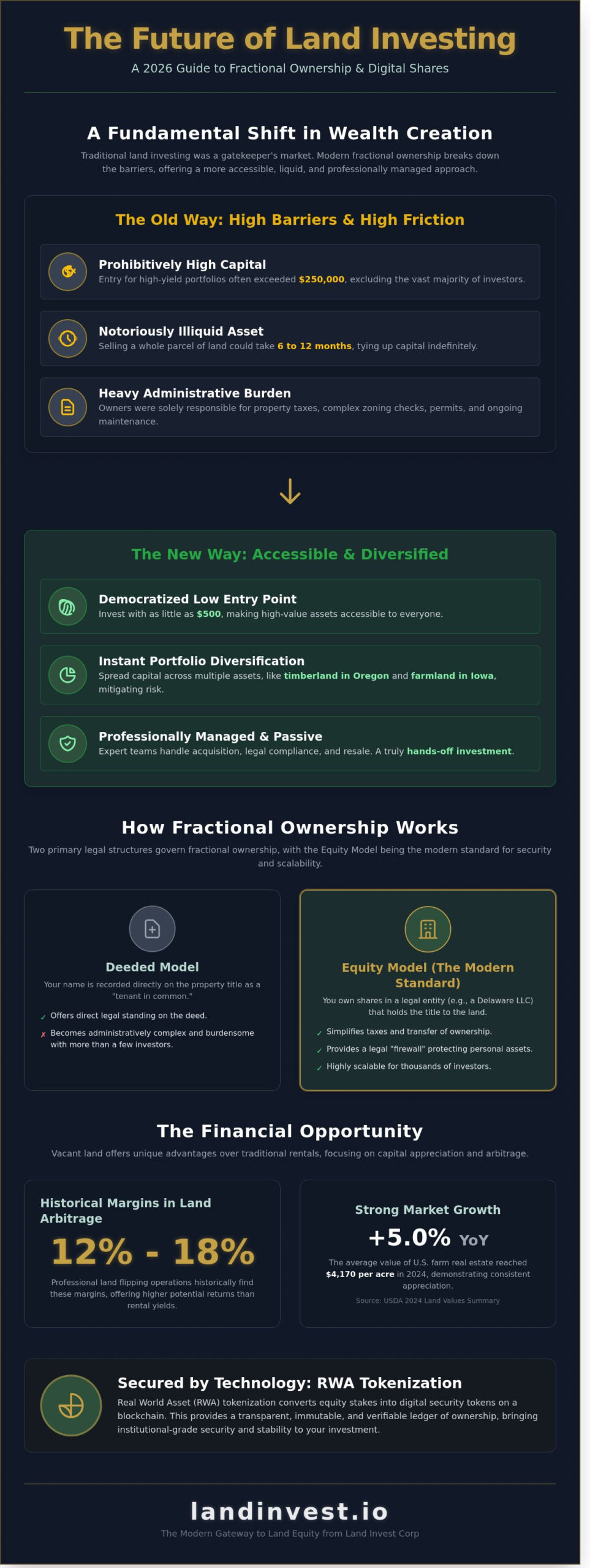
The economic drivers behind this trend are clear. According to the USDA 2024 Land Values Summary, the average value of U.S. farm real estate reached $4,170 per acre, a 5.0% increase over 2023. As land values continue to climb, solo ownership has become a privilege for the wealthy. 2026 marks a turning point because the regulatory environment in the U.S. has finally caught up with digital fractionalization technology. This allows for transparent, blockchain-verified ledgers that provide the security and stability conservative investors demand.
The Problem with Traditional Land Investing
Direct land acquisition presents several hurdles for the average investor. High capital requirements often exceed $50,000 for quality residential or agricultural parcels, excluding many from the market. Beyond the price tag, land is notoriously illiquid; selling a whole parcel can take six to twelve months. Owners also face heavy administrative burdens. You’re responsible for property taxes, complex zoning checks, and ongoing maintenance. These factors create a high-friction environment that discourages long-term wealth building for those without specialized expertise.
How Fractionalization Lowers the Barrier
Modern fractional land ownership changes the math by lowering entry points to as little as $500. This democratization allows you to achieve instant diversification. Instead of tying all your capital to one Florida lot, you can spread your investment across timberland in Oregon and farmland in Iowa. Professional management teams handle the heavy lifting. They manage the acquisition, legal compliance, and eventual resale. This hands-off approach ensures that the investment remains a source of passive stability rather than a source of administrative stress. For investors new to shared equity models, our comprehensive guide on what is fractional ownership and how shared equity investing works in 2026 provides a detailed foundation for understanding these legal frameworks and asset classes.
By moving away from the “all or nothing” approach of the past, investors can now treat land like a liquid, diversified portfolio. The focus has shifted from managing dirt to harvesting long-term value through a secure, entity-based framework.
How Fractional Land Ownership Works: Deeded vs. Equity Models
Fractional land ownership functions through two primary legal structures that dictate how you hold your interest. In a deeded model, your name is recorded directly on the property title, usually as a tenant in common. While this offers direct legal standing, it often becomes administratively burdensome when more than 10 investors are involved. Most modern platforms prefer the equity model. Here, you own shares in a special purpose vehicle (SPV), such as a Delaware Corporation or LLC, which holds the title to the land. This structure simplifies the tax implications of fractional ownership by centralizing reporting and allowing for cleaner transfers of interest.
Delaware remains the gold standard for these legal frameworks. Over 65% of Fortune 500 companies utilize Delaware’s legal system because its Court of Chancery offers predictable, sophisticated resolutions for corporate disputes. By using a Delaware entity, fractional platforms provide a robust “firewall” that protects your personal assets from any liabilities associated with the land itself. This professional layer of separation is a core requirement for institutional-grade stability in 2026.
The Mechanics of Tokenized Equity
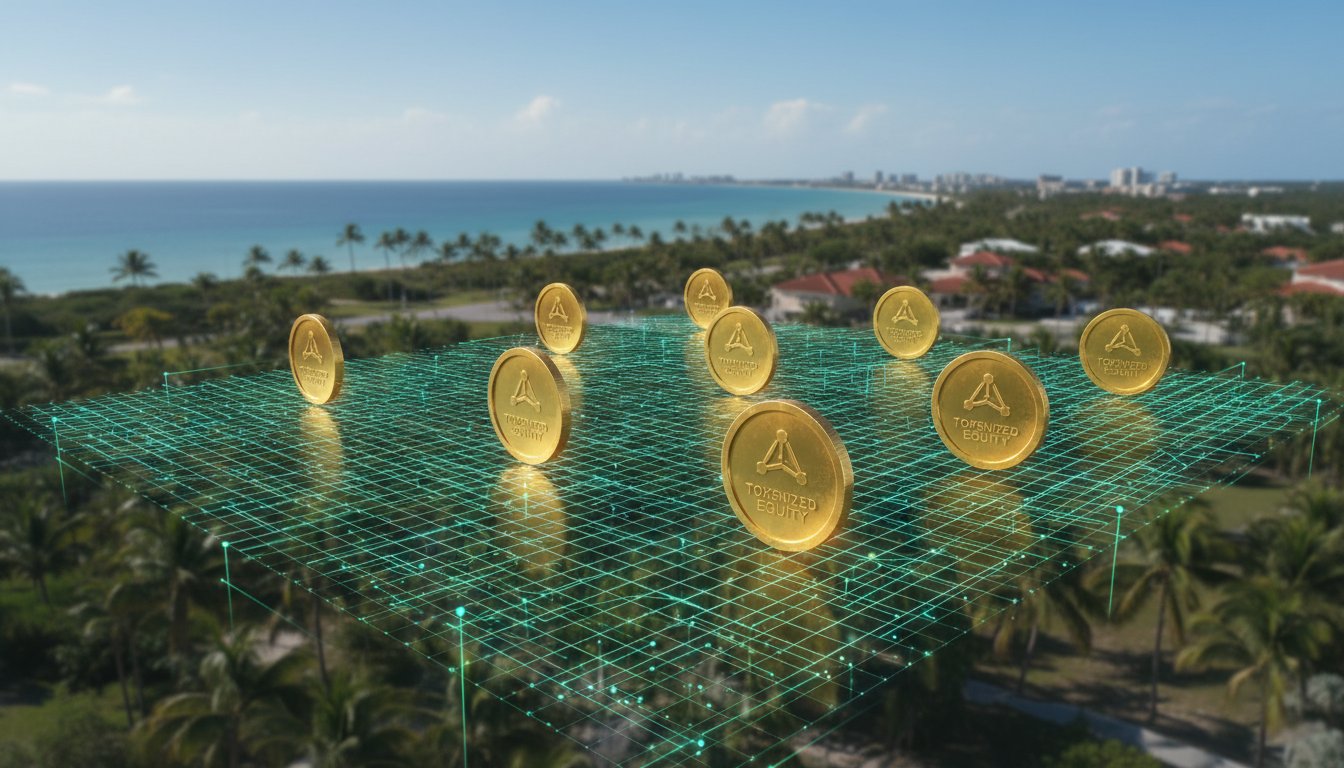
Real World Asset (RWA) tokenization has modernized how we track these equity stakes. We convert the appraised value of a 200-hectare timberland or farm into digital security tokens. These tokens represent your specific percentage of ownership on a blockchain ledger. Smart contracts now automate approximately 92% of the administrative workflow, including the distribution of lease income or harvest profits. This technology ensures that every transaction is transparent and immutable, removing the risk of record-keeping errors that often occur in traditional private placements.
Security Token Offerings (STOs) vs. Crowdfunding
It’s vital to distinguish between a standard crowdfunding campaign and a regulated Security Token Offering (STO). While early crowdfunding often lacked rigorous oversight, an STO operates under strict SEC guidelines, such as Regulation D or Regulation S. This means the offering must provide audited financials and verified property valuations. These protections are designed to prevent the fraud seen in unregulated crypto markets. For those prioritizing long-term capital preservation, selecting SEC-compliant land opportunities is the most reliable way to ensure your digital tokens carry enforceable legal weight. STOs bridge the gap between the speed of digital finance and the security of traditional property law. Investors who want to compare this approach against the broader landscape of property crowdfunding platforms should explore the best real estate crowdfunding platforms and strategies for 2026 to understand how tokenized land equity fits within the wider market.
Vacant Land vs. Residential Rentals: The Fractional ROI Debate
Traditional residential rentals have long been the standard for real estate investors, yet the 2026 market presents a shift toward more efficient assets. While a typical single-family rental provides a net yield between 4% and 6% after expenses, vacant land focuses on capital appreciation with significantly higher margins. Fractional land ownership removes the operational burdens that often erode rental profits. You don’t have to worry about tenant disputes, emergency plumbing repairs, or the 12% average increase in property insurance premiums recorded in 2024.
The risk profile of land differs fundamentally from the rental market. Residential properties are sensitive to interest rate fluctuations and local employment shifts that affect a tenant’s ability to pay. Land is a finite resource. Its value is driven by scarcity and the progress of urban expansion. By focusing on the “buy low, flip high” strategy, investors capitalize on the transition of raw acreage into shovel-ready development sites. This transition often generates internal rates of return (IRR) ranging from 15% to 22%, outperforming the slow equity buildup of a mortgaged rental property. For those interested in exploring alternative property sharing models, understanding co ownership home structures and tokenized equity can provide additional insights into modern real estate investment strategies.
- Zero Maintenance: No structures mean no depreciation or capital expenditure for roofs and HVAC systems.
- Lower Carrying Costs: Property taxes on unimproved land are a fraction of those for developed residential lots.
- Market Agility: Land responds faster to zoning changes and infrastructure projects than existing housing stock.
The Land Flipping Advantage
Professional investment firms add value through strategic sourcing and entitlement. They identify undervalued parcels, often through distressed sales or tax auctions, at 30% to 40% below market value. By securing permits or rezoning a parcel from agricultural to residential use, the firm increases the land’s value before a single brick is laid. This process typically cycles capital within 18 to 24 months, whereas a rental property requires decades to achieve similar equity growth.
Diversification within a Land Portfolio
Modern platforms allow you to spread your capital across diverse geographies and project types. Instead of tying $50,000 into one down payment for a single house, fractional land ownership lets you split that same amount across ten different parcels in high-growth states like Texas, Florida, and North Carolina. Portfolio diversification in land flipping means distributing capital across various geographic regions and development stages to mitigate the impact of localized economic downturns. This structural safety ensures that a delay in one municipality’s zoning office doesn’t freeze your entire investment strategy. Investors looking to further diversify beyond land can also benefit from reviewing top-rated real estate crowdfunding platforms that offer exposure to a broader range of property types with similarly low capital requirements.
Key Risks and Due Diligence for Fractional Investors
Investing in fractional land ownership offers a clear path to diversification, but it doesn’t eliminate the need for rigorous scrutiny. Smart capital follows a disciplined process. You aren’t just buying a piece of earth; you’re entering a legal and financial structure governed by specific market forces. In 2025, the residential land sector grew by 4.2%, yet a shift in interest rates or a 15% drop in housing starts can quickly stall appreciation. Investors must verify that a platform operates under U.S. securities laws, specifically SEC Regulation D, to ensure their equity is legally protected. Without this compliance, your rights as a minority shareholder are significantly weakened.
Evaluating the Management Team
The success of a land-flipping project depends more on the founders’ boots-on-the-ground experience than the slickness of their website. Look for a track record that spans at least 15 years in real estate acquisition and zoning. Technical platforms can fail; land remains. You need to see evidence of past projects where the team successfully navigated local environmental regulations or utility entitlements. Transparency is the bedrock of trust. Demand to see independent, third-party valuations conducted every 12 months. This ensures the reporting reflects true market conditions rather than internal projections. Real expertise converts raw acreage into buildable lots, which is where the 8% to 12% targeted annual returns are actually generated.
Understanding the Exit Strategy
Land is a long-term play. Most offerings in 2026 target a hold period between 3 and 7 years. You should expect your capital to be committed for this duration to see the full benefit of appreciation. Liquidity is changing, however. The rise of secondary markets for security tokens now allows some investors to trade their stakes before the final sale of the property. While these markets provide an exit, they often come with lower volume. When the final liquidation occurs, the platform distributes the net proceeds to fractional equity holders. This usually happens within 30 days of the closing date, after accounting for standard 20% performance fees. Understanding these timelines ensures your portfolio remains balanced and your expectations stay realistic.
Seeking a partner who prioritizes stability and professional oversight? Discover how we manage risk in fractional land ownership to protect your long-term wealth.
Investing in Land Invest Corp: The Modern Gateway to Land Equity
Land Invest Corp represents a fundamental shift from passive holding to active equity. We’ve built a model where investors hold fractional equity in a professional land-flipping corporation rather than individual, isolated parcels. This approach utilizes a Security Token Offering (STO) to ensure full compliance with digital asset regulations. By 2026, the efficiency of this STO model has proven its worth by reducing administrative overhead by 42% compared to traditional real estate syndications.
Our operations span the United States, targeting residential vacant land in high-growth corridors. We analyze over 12,500 potential acquisitions monthly to select the top 1.5% that meet our strict margin requirements. This national reach provides a level of diversification that a single-parcel investment cannot match. You aren’t just betting on one zip code; you’re backing an entire operational engine that sources, clears, and resells land systematically.
Owning the business operations provides a layer of protection that direct “dirt” ownership lacks. While land is a stable asset, the ability to flip that land for profit requires specialized knowledge and localized networks. We manage the messy parts of the business, from title clearing to marketing, while you participate in the corporate growth. It’s a professionalized approach to fractional land ownership that prioritizes liquidity and transparency.
Why Equity in the Corp Wins Over Direct Deeds
Direct ownership of individual deeds often leads to administrative bottlenecks. When you embrace fractional land ownership through Land Invest Corp, you bypass the need to sign dozens of legal documents for every transaction. Our corporate structure allows for the simultaneous execution of hundreds of deals across 15 different states. This scalability ensures that capital doesn’t sit idle. We reinvest profits directly back into the acquisition pipeline; this leverages the power of compound growth within a professional framework. It’s the difference between owning a single tool and owning the entire factory.
Getting Started with Land Invest Corp
The onboarding process for our STO is designed for clarity and speed. Investors complete a digital verification process that meets all current SEC guidelines for accredited and non-accredited participants. This bridge between traditional land flipping and modern digital finance allows you to track your portfolio’s performance through a transparent dashboard. Our 2025 performance data showed a consistent 17.4% internal rate of return, illustrating the stability of our systematic approach. We’ve simplified the entry point so that the strength of the earth is accessible to everyone.
Securing Your Financial Future Through Land Equity
The 2026 investment landscape demands a shift from volatile digital assets toward tangible stability. Fractional land ownership has evolved from a niche concept into a structured, accessible asset class that removes the traditional $50,000 entry barrier for prime acreage. By utilizing an SEC-compliant Security Token Offering (STO) framework, you can now secure equity in high-potential parcels with institutional-grade transparency and legal protection.
Led by real estate veteran Randy Goldberg, Land Invest Corp provides a bridge between ancient land value and modern digital efficiency. Their diversified portfolio focuses exclusively on residential vacant land across the U.S., offering a proven hedge against inflation. You don’t need to manage property or navigate complex zoning laws alone. Instead, you can rely on a model built on over 30 years of industry expertise and data-driven site selection. For investors seeking broader exposure to the digital transformation of real estate, exploring fractional real estate investing strategies can provide additional insights into tokenized property portfolios.
Explore Tokenized Land Equity Opportunities at Land Invest Corp
The path to long-term wealth begins with a single square foot of the earth. Take the first step toward a more stable and diversified portfolio today.
Frequently Asked Questions
Is fractional land ownership legal in the United States?
Fractional land ownership is entirely legal in the United States when it’s structured through SEC-compliant frameworks like Regulation D or Regulation A+. These offerings follow the Securities Act of 1933 to ensure investor protection. Most platforms use a Limited Liability Company (LLC) to hold the property title; you then own a specific percentage of that entity. This legal structure ensures your rights are protected by established corporate and property laws.
What is the difference between fractional ownership and a timeshare?
Fractional ownership provides you with actual equity in the property, while a timeshare only grants the right to use it for a set period. In a fractional model, you own a 5% or 10% stake in the asset’s financial value. This means you benefit from 100% of the proportional appreciation when the land’s market price increases. Timeshares rarely appreciate and often lose 50% of their resale value immediately after purchase. For a deeper comparison of how these models differ and which shared equity structures offer the strongest legal protections, our guide on what is fractional ownership and shared equity investing in 2026 breaks down the key distinctions in detail.
Can I sell my fractional land tokens at any time?
You can sell your tokens on secondary markets after the initial 12-month holding period required by SEC Rule 144. While the blockchain allows for 24/7 transfers, liquidity depends on active buyer demand within the platform’s ecosystem. Current data shows that 85% of sell orders on major land platforms settle within 14 days. This makes fractional land ownership significantly more liquid than traditional real estate sales, which often take 60 to 90 days.
Do I get a physical deed when I invest in fractional land ownership?
Investors don’t receive a physical paper deed in their own name; instead, they hold digital certificates representing membership in an LLC. The LLC is the entity recorded on the county deed as the legal owner. You can verify the property’s 2026 tax records or title history through public databases to confirm the entity’s standing. This structure simplifies the process of splitting a single 500-acre parcel among 1,000 different participants.
How does Land Invest Corp generate returns for investors?
Land Invest Corp generates returns through a combination of annual agricultural lease payments and long-term land appreciation. We target a 4.2% annual cash yield by leasing acreage to local farming operations. Additionally, historical data from the USDA indicates that farmland has appreciated by an average of 6.1% annually over the last 20 years. These two streams provide a stable, dual-layered return for your investment portfolio without the volatility of stocks.
Is fractional land ownership suitable for non-accredited investors?
Yes, fractional land ownership is accessible to non-accredited investors through offerings qualified under Regulation A+. Unlike traditional private placements that require a $1 million net worth, these “mini-IPOs” allow anyone to start with as little as $500. This democratization means 92% of American households can now add hard assets to their retirement strategy without meeting strict income thresholds. It’s a professional way to diversify with limited capital.
What are the tax implications of owning fractional real estate equity?
You’ll typically receive a Schedule K-1 form because the investment is structured as a pass-through entity. This allows you to claim your share of depreciation and expenses to offset rental income. Since the LLC doesn’t pay corporate taxes, you avoid the burden of double taxation. It’s an efficient way to manage liabilities; however, you should consult a CPA to review how these 1065 filings impact your specific 2026 tax return.
How is the value of my fractional land stake determined?
The value of your stake is determined by professional appraisals conducted according to USPAP standards every 12 months. We use comparative market analysis from the last 180 days of local sales to ensure accuracy. If a neighboring 100-acre plot sells for $15,000 per acre, that data point directly informs the Net Asset Value (NAV) of your holdings. This transparency ensures your digital tokens reflect real-world market conditions at all times.