What if the permanence of physical land could be harnessed with the liquid efficiency of crypto real estate? Many investors find that while digital assets offer high growth, the 30% volatility swings common in the market make long-term wealth preservation difficult. You’ve likely felt the frustration of trying to move significant capital into traditional markets, only to be met with weeks of paperwork and high intermediary fees. It’s a gap that often keeps wealth trapped in a cycle of digital uncertainty.
We believe that true financial security comes from balancing innovation with tangible stability. This 2026 guide explains how to bridge this divide by turning volatile tokens into shares of productive land. You’ll learn how the latest tokenisation models provide a clear legal path through Security Token Offerings (STOs), allowing for passive income without the traditional headaches of property management. We’ll break down the specific frameworks that turn Real World Assets (RWA) into the foundation of a diversified, resilient portfolio for the modern era.
Key Takeaways
- Understand the transition from experimental digital transactions to institutional-grade Real World Asset (RWA) tokenization for long-term stability.
- Discover why the Security Token Offering (STO) has emerged as the essential legal framework for ensuring investor protection and regulatory compliance.
- Evaluate the strategic benefits of passive equity ownership compared to traditional landlording to minimize management burdens and capital requirements.
- Learn the step-by-step process for navigating compliant platforms and securing digital wallets to build a diversified crypto real estate portfolio.
- Explore how Land Invest Corp utilizes fractional ownership to make the enduring value of residential vacant land accessible through modern blockchain technology.
What is Crypto Real Estate in 2026?
Crypto real estate represents the professional convergence of blockchain technology and physical property assets. By 2026, the sector has moved far beyond the experimental phase of early Bitcoin transactions. We’ve entered a maturity phase where institutional-grade structures provide a secure bridge between digital wealth and tangible land. This evolution ensures that property investment is no longer tethered to slow, paper-based legacy systems that haven’t changed in decades.
The 2026 investment landscape prioritizes transparency and efficiency. Investors now utilize 24/7 markets to manage their holdings, moving away from the restrictive banking hours of the past. Instant settlement has replaced the traditional 30 to 60-day closing windows. These advancements have lowered barriers to entry, allowing a broader demographic to participate in high-value property markets without the need for massive upfront capital or complex legal intermediaries. It’s a shift toward a more democratic and liquid form of wealth preservation.
The Three Pillars of the Digital Property Market
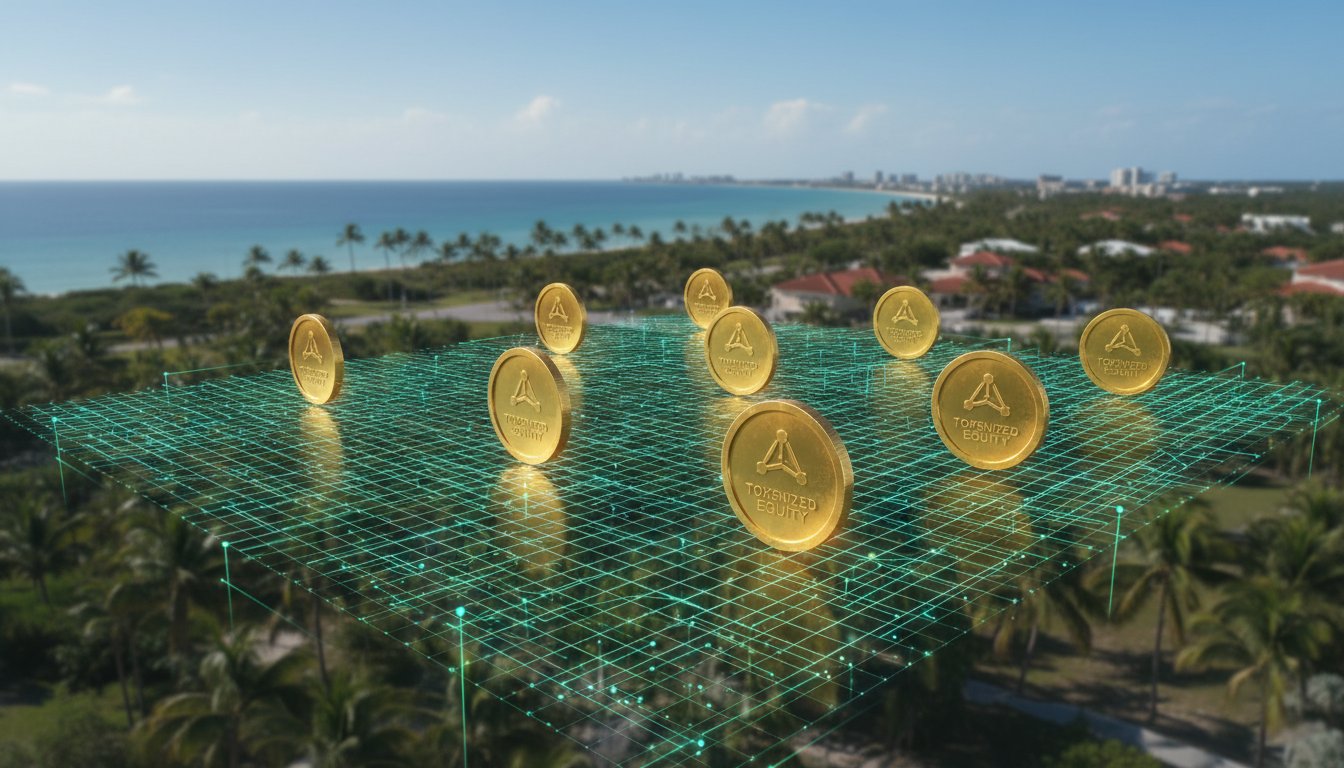
Modern digital property investment relies on three distinct structures. Direct purchase allows investors to use cryptocurrency as a medium of exchange for an entire deed, a process that became streamlined after the 2025 global regulatory harmonisation. Tokenised Equity involves holding digital shares in a corporation that owns and manages real estate, offering a hands-off approach to yields. Fractional Ownership is perhaps the most transformative, as it divides a single asset into thousands of tradable units. This ensures that even premium commercial or agricultural plots are accessible to those seeking precise diversification.
The Role of RWA (Real World Assets) in Modern Portfolios
Real World Assets serve as a stabilizing force within the often-volatile digital economy. While many cryptocurrencies fluctuate based on market sentiment, land remains a foundational asset with intrinsic value. A Tokenized real-world asset provides the perfect middle ground by combining the security of physical property with the mobility of blockchain. RWA tokenisation is the process of digitising physical asset rights on a ledger. This methodology allows investors to hedge against inflation while maintaining a liquid portfolio. By 2026, RWA integration has become the standard for conservative investors who value the “quiet strength” of the earth but demand the convenience of modern financial tools.
How Tokenised Real Estate Works: The Mechanics of the STO
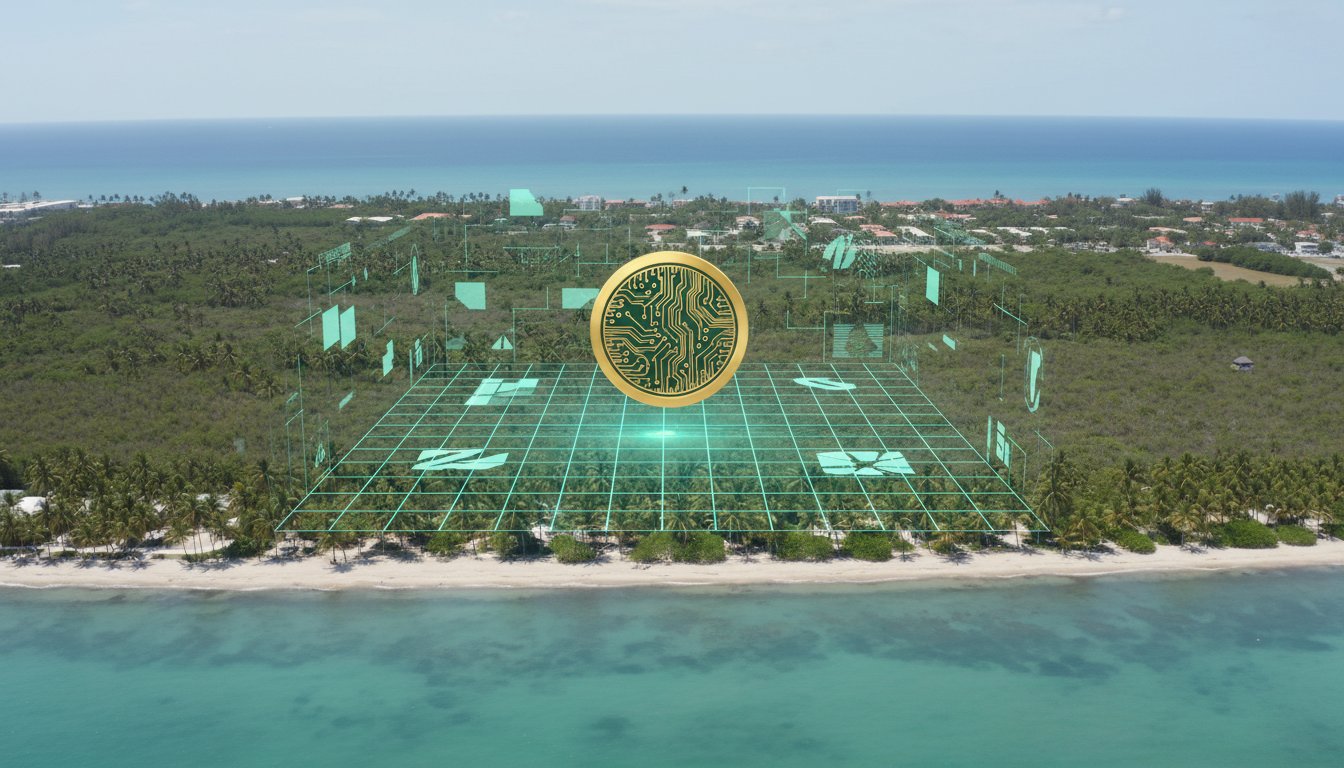
Tokenisation transforms a physical asset into a series of digital tokens recorded on a distributed ledger. This process relies on smart contracts to execute transactions automatically when specific conditions are met, removing the need for traditional intermediaries. Oracles act as the bridge between the physical and digital worlds, feeding real-world data like property valuations or rental income directly to the blockchain. In 2023, the global market for tokenised real estate assets reached a valuation of approximately $200 million, reflecting a growing shift toward this transparent model.
The transition from paper deeds to digital tokens requires a rigorous legal framework to protect participants. This legal analysis of crypto real estate explains how security tokens represent actual ownership interests rather than speculative utility. By using the Security Token Offering (STO) model, issuers adhere to established securities laws. This provides investors with the same legal protections found in traditional equity markets, ensuring that the digital asset is backed by the physical land or building.
Investors in crypto real estate gain specific rights that mirror conventional property ownership. These include periodic dividends derived from rental yields, voting power on key management decisions, and a pro-rata share in the property’s capital appreciation. It’s a method that prioritizes long-term stability and tangible value, moving away from the high-frequency volatility typical of other digital assets. Understanding how real estate blockchain technology is reshaping these ownership structures provides essential context for any serious investor.
The Architecture of a Security Token
Smart contracts automate the distribution of profits and the enforcement of compliance rules. Unlike standard cryptocurrencies, security tokens integrate KYC (Know Your Customer) and AML (Anti-Money Laundering) checks at the protocol level. This means a token can’t be transferred to an unverified wallet, maintaining a closed loop of compliant participants. Every acquisition and transaction is recorded on a public blockchain, providing a permanent, immutable audit trail that traditional property registries can’t match.
Security Token Offerings (STO) vs. Traditional REITs
Traditional Real Estate Investment Trusts (REITs) often carry significant management fees, sometimes ranging between 2% and 3% annually, which can eat into total returns. STOs reduce these overhead costs through blockchain automation, potentially passing higher yields back to the investor. While REITs trade on stock exchanges, they don’t always offer direct exposure to the specific operations of a land acquisition firm. Asset tokenization allows for fractional ownership with increased liquidity, enabling investors to trade their stakes on secondary markets at any time. For those looking to ground their portfolio in physical security, a closer look at how LandInvest.io integrates these technologies offers a clear path forward.
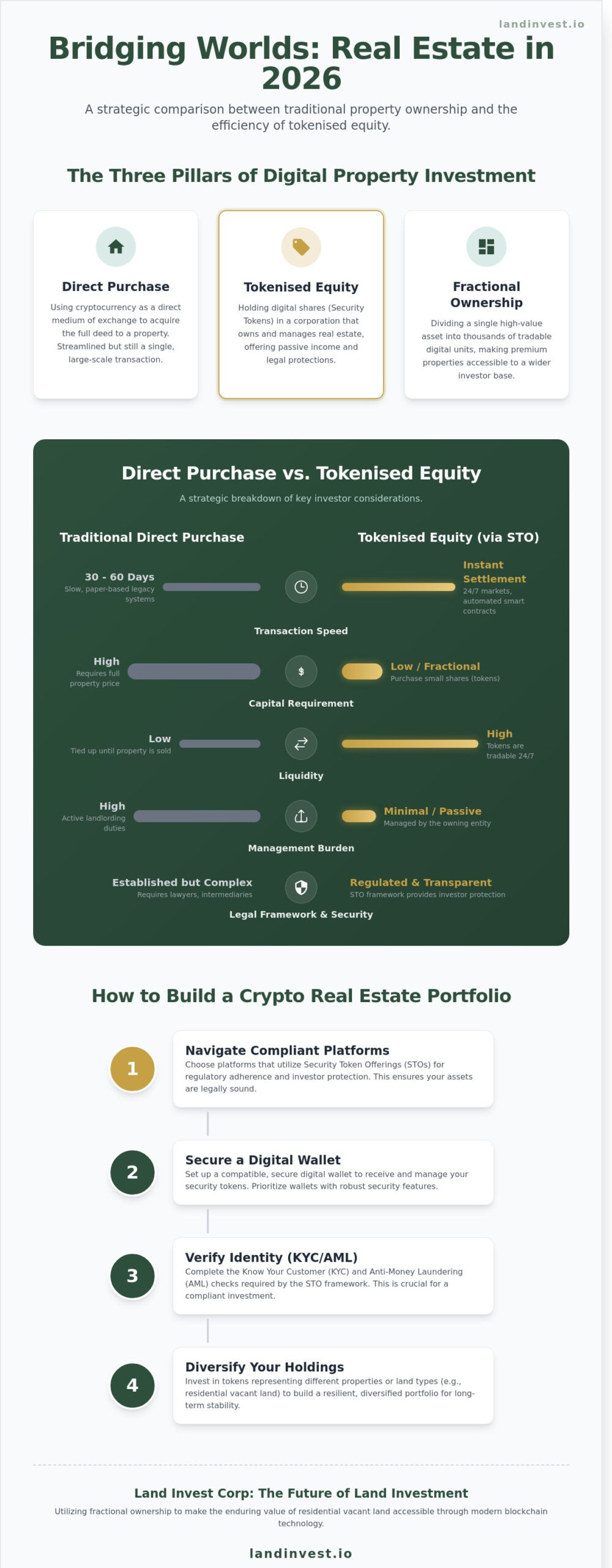
Direct Purchase vs. Tokenised Equity: A Strategic Comparison
Choosing the right path in crypto real estate requires a sober analysis of your capital, time, and risk tolerance. A direct purchase involves buying a specific property deed using digital assets, a process that demands significant liquidity. In 2024, most residential acquisitions in prime markets require a minimum of $350,000 for a direct transaction. This path places you in an active management role. You become a landlord responsible for maintenance, local property taxes, and tenant relations. It is a high-commitment strategy that ties your capital to a single physical location.
Tokenised equity offers a different profile. Instead of managing a single house, you hold digital tokens representing a share in a larger portfolio. This shift changes the management burden from active to passive. Professional firms handle the operational details while you focus on portfolio growth. Liquidity also differs between these paths. Selling a physical house takes an average of 65 to 90 days in a standard market. Digital equity tokens can often be traded on secondary platforms much faster, sometimes within 24 to 48 hours. This flexibility allows for better capital rotation and faster reactions to market shifts.
Diversification is perhaps the most significant advantage of the equity model. A direct purchase puts all your capital into one building. If that specific neighborhood declines, your investment suffers. Equity models allow you to spread that same amount of capital across dozens of vacant land parcels or commercial buildings. This strategy creates a safety net, as the performance of the portfolio doesn’t rely on a single asset.
The Challenges of Direct Property Buying with Crypto
Cashing out digital assets to purchase a deed directly often triggers immediate tax events. Depending on your tax residency, capital gains liabilities can reach 20% or 30% before you even sign the closing documents. Finding sellers who accept wallet-to-wallet transfers remains difficult. In 2024, less than 1% of global residential listings are set up for direct crypto settlement. Most title insurance companies and escrow agents still struggle with the compliance requirements of blockchain-based payments. Legal researchers discussing the future of real estate transactions note that while technology is ready, the bridge between digital code and traditional land registries remains complex and filled with administrative hurdles.
The Efficiency of the Equity Model
For investors with mid-sized capital, tokenised real estate provides a more efficient entry point. It eliminates the need for international travel, local lawyers, and physical inspections. You can reduce geographic risk by investing in national land portfolios that cover multiple agricultural or development zones. These equity tokens represent a legal stake in the firm, not just a digital receipt, providing a robust layer of investor protection. This structure ensures that your digital holdings are backed by audited, tangible assets that retain value even during periods of high inflation.
How to Invest in Crypto Real Estate: A Step-by-Step Guide
Investing in crypto real estate requires a methodical approach that prioritizes legal compliance over speculative gains. The process begins with selecting a platform that specializes in Real World Assets (RWA) or Security Token Offerings (STOs). These platforms operate under strict regulatory frameworks, such as the SEC in the United States or MiCA in Europe. Choosing a compliant real estate tokenization platform ensures that your digital tokens represent a valid legal claim to physical property or land.
Once you’ve selected a platform, you must set up a compatible digital wallet. Hardware wallets like Ledger or Trezor offer the highest security, while browser-based options like MetaMask are common for daily interactions. Verification is the next critical step. Unlike anonymous meme coins, 100% of regulated real estate platforms require Know Your Customer (KYC) and Anti-Money Laundering (AML) checks. This process typically takes 24 to 48 hours to complete.
Funding your investment involves choosing between stablecoins and native assets. Many investors prefer USDC or USDT because they maintain a 1:1 peg with the US Dollar, which eliminates price volatility during the transaction. Native assets like Ethereum or Bitcoin are also accepted on various platforms, though they carry higher exchange rate risks. After the purchase, you can monitor your holdings through a personalized dashboard or directly on the blockchain. While traditional real estate is often locked for years, the secondary market for tokenized assets is growing. According to a 2023 report by Boston Consulting Group, the asset tokenization of global illiquid assets is projected to reach $16 trillion by 2030, which will significantly improve liquidity options for investors.
Due Diligence for Digital Property
Success depends on the quality of the underlying asset. You should verify the track record of the founding team; look for leaders with at least 10 or 15 years of experience in traditional real estate or agriculture. Transparency is vital. A reputable project will provide clear data on its land acquisition strategy and third-party appraisals. Understanding lock-up periods is equally important. Most institutional-grade projects implement a 12 to 24 month holding period to ensure project stability before allowing secondary market trading.
Executing Your First Token Purchase
Building a stable portfolio starts with choosing the right assets. Learn how you can secure your future with tangible land-based investments that combine tradition with technology.
The Future of Land: Why Land Invest Corp Leads the Market
Land Invest Corp operates at the intersection of ancient value and modern technology. While many investors focus on volatile tokens, this platform provides a bridge to tangible, residential vacant land. The company identifies undervalued parcels across the United States, acquiring them at significant discounts to market value. By focusing on high-margin resale, Land Invest Corp creates a sustainable model for crypto real estate enthusiasts who prioritize stability over speculation.
The core of this strategy involves flipping residential-zoned land. Unlike commercial developments that require years of permitting and heavy construction, vacant residential lots offer a faster turnaround. Land Invest Corp utilizes Security Token Offerings (STOs) to facilitate this process. These tokens represent actual equity in a diversified portfolio of land assets. It’s a compliant, transparent way to hold property interests without the burdens of traditional deed transfers or local legal hurdles.
Why Vacant Land is the Ultimate RWA
Real World Assets (RWAs) are transforming the blockchain space, and land remains the most reliable among them. Vacant land carries zero maintenance costs. There are no tenants to manage, no pipes to burst, and no structures to insure. This simplicity reduces overhead and preserves capital. Because the supply of land is finite, it serves as a natural hedge against currency devaluation. Investors can explore the mechanics of this through fractional land ownership, which allows for precise capital allocation across various US markets.
- Zero Tenant Issues: No eviction processes or property management headaches.
- Low Carrying Costs: Property taxes on vacant land are typically 1-2% of the value, far lower than developed property.
- Inherent Scarcity: Land cannot be manufactured, ensuring long-term value retention in growing regions.
Getting Started with Land Invest Corp
Participating in the US land market no longer requires a local presence or a massive capital outlay. Through a compliant STO framework, Land Invest Corp opens the door to global participants. Holding equity in a diversified portfolio mitigates the risk of a single-market downturn. Each token holder benefits from the collective growth of parcels located in high-demand regions. You can Secure your stake in the future of land investment today.
This approach democratizes crypto real estate by removing the traditional barriers to entry. The platform provides a logical, data-driven path for those seeking to protect their wealth. By combining the security of land with the efficiency of blockchain, Land Invest Corp offers a professional solution for the modern era. It’s a method built on the philosophy that the most secure future is one rooted in the earth.
Building a Resilient Portfolio for the Digital Age
Real estate expert Randy Goldberg founded Land Invest Corp to bridge this gap, focusing specifically on high-margin US residential vacant land. As a compliant Delaware corporation, the platform offers a secure environment for long-term growth. It’s about combining the ancient value of the earth with the precision of modern finance. If you’re ready to move beyond market volatility and secure a stake in a diversified national land portfolio, now’s the time to act. Invest in the Land Invest Corp STO and own equity in a national land portfolio. We’re here to help you build a legacy that lasts for generations.
Frequently Asked Questions
Can I buy real estate directly with Bitcoin?
You can buy property directly with Bitcoin if the seller and the title company agree to the terms of the digital transfer. In June 2021, a penthouse in Miami’s Arte Surfside building sold for $22.5 million in cryptocurrency, which remains a landmark for crypto real estate transactions. These deals often use a third-party processor to convert the funds or manage the escrow to ensure the transaction complies with local tax requirements.
Is crypto real estate investing legal in the United States?
Investing in crypto real estate is legal in the United States under established SEC and FINRA frameworks. Most platforms use Regulation D or Regulation A+ to offer digital interests in property to investors. Since the SEC issued its DAO Report in 2017, these digital assets are treated as securities. This means they require strict adherence to Know Your Customer (KYC) and Anti-Money Laundering (AML) protocols to protect all parties involved.
What is the difference between a real estate token and a REIT?
A real estate token represents direct fractional ownership of a specific, identifiable property recorded on a blockchain ledger. In contrast, a Real Estate Investment Trust (REIT) is a company that manages a large portfolio of various assets. While REITs are required by the IRS to distribute 90% of taxable income to shareholders, tokens allow you to select individual buildings and trade them 24/7 on secondary markets without a central fund manager.
Do I get a physical deed when I buy a real estate token?
You don’t receive a physical paper deed in your personal name when you purchase a token. Instead, the legal title of the property is held by a Special Purpose Vehicle (SPV), such as an LLC. Your ownership stake in that specific legal entity is represented by digital tokens. This structure ensures the property remains legally secure while the blockchain provides a transparent, immutable record of your fractional investment.
How do I earn money from a crypto real estate investment?
You earn money through regular rental income distributions and the long-term capital appreciation of the physical asset. Most platforms distribute these yields monthly in stablecoins like USDC directly to your digital wallet. If the property’s market value increases by 8% over a year, the value of your tokens typically rises to reflect that growth. It’s a stable way to build wealth without the volatility of unbacked digital coins.
What are the risks of investing in tokenised real estate?
The primary risks involve smart contract vulnerabilities and the potential for lower liquidity in secondary markets. A 2023 report from Chainalysis noted that while blockchain is secure, code exploits remain a factor in decentralized finance. You also face traditional property risks, such as vacancy periods or unexpected maintenance costs. Diversifying your holdings across multiple properties is a logical way to mitigate these specific operational hazards.
Can non-accredited investors participate in real estate STOs?
Non-accredited investors can participate in real estate Security Token Offerings (STOs) if the project is filed under Regulation A+. This specific SEC rule allows companies to raise up to $75 million from the general public. While many private placements are restricted to individuals earning over $200,000 annually, the growth of “mini-IPOs” has made property ownership accessible to anyone with a few hundred dollars to invest.
How is the value of a real estate token determined?
The value of a token is based on a professional appraisal of the underlying physical property. Independent firms like CBRE or JLL conduct these valuations to establish the Net Asset Value (NAV) of the holding entity. This total value is divided by the number of tokens issued to create a fair price. It’s a transparent process that relies on tangible data rather than the speculative sentiment often found in other digital asset markets.